Spatial Release From Masking in Listeners With Single-Sided Deafness: Effects of Symmetric and Asymmetric Multi-Talker Configurations
일측성 난청인의 공간 분리에 따른 이득: 대칭 및 비대칭 다중 화자 조건
Article information

Abstract
Background and Objectives
This study investigated speech-on-speech recognition and spatial release from masking (SRM) across symmetric and asymmetric spatial configurations in listeners with single-sided deafness (SSD) compared with normal-hearing (NH) listeners.
Subjects and Method
Fifteen adults with SSD and 15 NH adults participated. Speech-onspeech recognition was measured using a three-talker paradigm. Competing talkers were either co-located with the target or spatially separated in symmetric or asymmetric configurations, with the maskers positioned toward either ear. SRM was quantified as the difference between spatially separated and co-located conditions.
Results
In symmetric configurations, SRM increased with spatial separation in both groups but was consistently smaller in listeners with SSD than in NH listeners. In asymmetric configurations, NH listeners showed no clear systematic difference in SRM across masker locations, whereas listeners with SSD showed a pronounced effect of masker laterality. SRM was approximately 44–59 percentage points when both maskers were positioned toward the SSD ear, compared with only 10–11 percentage points when positioned toward the NH ear.
Conclusion
Spatial separation benefit in listeners with SSD varied substantially with spatial configuration and masker laterality. The pronounced laterality effect suggests that head shadow and better-ear access contributed to differences in SRM, particularly when maskers were directed toward the SSD ear. However, residual SRM remained when maskers were positioned toward the NH ear. These findings highlight the importance of considering spatial configuration and masker laterality when assessing speech-on-speech recognition performance and counseling individuals with SSD.
Introduction
Single-sided deafness (SSD) is characterized by severe-to-profound sensorineural hearing loss in one ear with normal or near-normal hearing in the contralateral ear and affects approximately 0.1% of the adult population [1-3]. Although hearing through one normal-hearing (NH) ear has traditionally been considered sufficient for everyday communication, individuals with SSD frequently experience impaired sound localization and reduced speech understanding in noise [3-5]. The impact of SSD extends beyond auditory performance. Adults with SSD report greater emotional distress, reduced social participation, and increased communication difficulties than NH individuals [6,7]. These difficulties are associated with substantial social, psychological, and hearing-related quality-of-life consequences [8,9].
Despite the availability of rehabilitation options such as contralateral routing of signals (CROS) hearing aids, bone-conduction devices (BCDs), and cochlear implants, individuals with SSD often report markedly different listening difficulties and treatment preferences even when audiometric profiles are broadly comparable [10,11].
Individuals with SSD frequently report communication difficulties in complex listening environments containing competing sound sources [12]. Successful communication in such situations depends heavily on spatial hearing, including the ability to segregate target speech from competing sound sources and accurately identify its content. The benefit obtained when the target and the competing sources are spatially separated is known as spatial release from masking (SRM), with two major contributors. The first is a monaural betterear advantage, in which the acoustic head shadow improves the signal-to-noise ratio at the ear farther from the masker. The second is binaural unmasking, in which the auditory system uses differences in the signals available at the two ears [13,14]. Binaural unmasking requires two functioning ears and is therefore largely unavailable in SSD, making better-ear access associated with the acoustic head-shadow effect an important source of spatial benefit. For example, Kitterick, et al. [15] reviewed the evidence for rerouting devices in SSD and reported that device-related benefit for speech in noise depends on the spatial arrangement of the speech and the competing sounds. These findings suggest that communication outcomes in SSD may depend on the direction and spatial arrangement of competing talkers relative to the target speech.
Most experimental studies of SRM have relied on a single masker positioned asymmetrically relative to the target (e.g., S0°N±90°), but the resulting benefit depends heavily on where that masker is placed, since directing it toward the impaired versus the hearing ear yields very different outcomes. Such single-masker paradigms therefore provide limited insight into real-world listening, where multiple competing talkers are typically present simultaneously and may be distributed symmetrically around the listener or clustered toward one side [16]. For a listener with only one functional ear, headshadow attenuation at that ear may differ between the two symmetrically positioned maskers. Spatial benefit in SSD may thus depend strongly on masker laterality, and it remains unclear whether SRM differs between symmetric and asymmetric configurations in SSD, or whether residual SRM remains when maskers are directed toward the NH ear.
This laterality-dependent spatial benefit may be clinically relevant when counseling individuals with SSD regarding rehabilitation options. Previous multi-talker studies have primarily examined simulated unilateral deafness or cochlear implant users with SSD [17-20], and symmetric versus asymmetric configurations have rarely been examined in unaided SSD listeners. Nonspatial factors such as voice-related segregation cues and selective attention may also contribute to speech-on-speech performance [19-21], but how these interact with spatial configuration and masker laterality in this population remains unclear. Therefore, the present study compared SRM in listeners with SSD and NH controls using symmetric and asymmetric three-talker configurations. We hypothesized that SRM would vary with spatial configuration and that SSD listeners would show greater dependence on masker laterality than NH listeners. We further explored whether measurable SRM would remain when maskers were directed toward the NH ear.
Subjects and Methods
Participants
Fifteen adults with SSD participated in this study. SSD was defined as a four-frequency pure-tone average (4fPTA; 0.5, 1, 2, and 4 kHz) of ≥70 dB HL in the poorer ear and ≤30 dB HL in the better ear. Among participants with SSD, the mean 4fPTA was 96.83±11.37 dB HL in the SSD ear and 9.17±4.90 dB HL in the contralateral NH ear. Pure-tone audiometry was conducted in a sound-treated booth with a calibrated audiometer (Astera2; Natus Medical Inc.) and supra-aural headphones (TDH-49; Telephonics Corp.). The mean age of the participants with SSD was 29.33 years (±6.49), and the mean duration of SSD was 10.47 years (±3.44) (Table 1). Middle-ear status was confirmed by otoscopic examination and tympanometry in all participants, and sensorineural hearing loss was verified by air-bone gap assessment during pure-tone audiometry. Fig. 1 shows the individual (thin lines) and mean audiometric thresholds (thick lines) for the SSD and NH ears. None of the participants reported past or current use of an amplification device, a history of significant noise exposure, neuro-otologic disorders, or tinnitus.
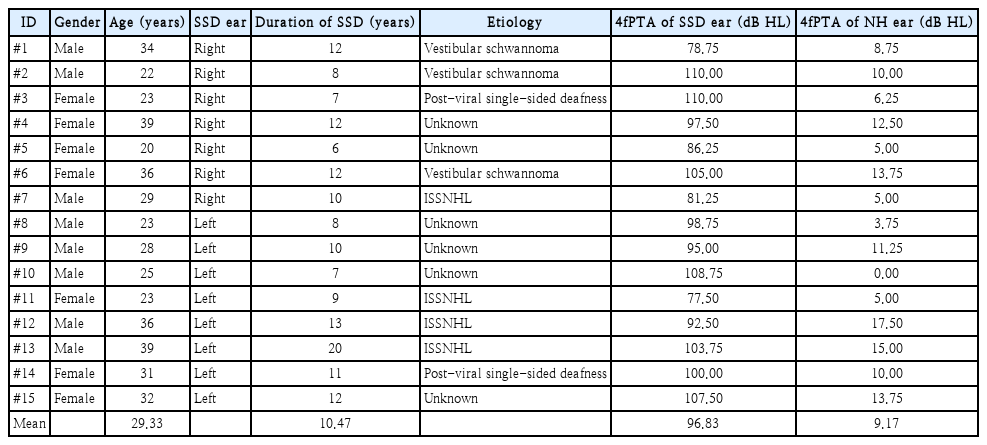
Demographic and clinical characteristics of the 15 participants with SSD
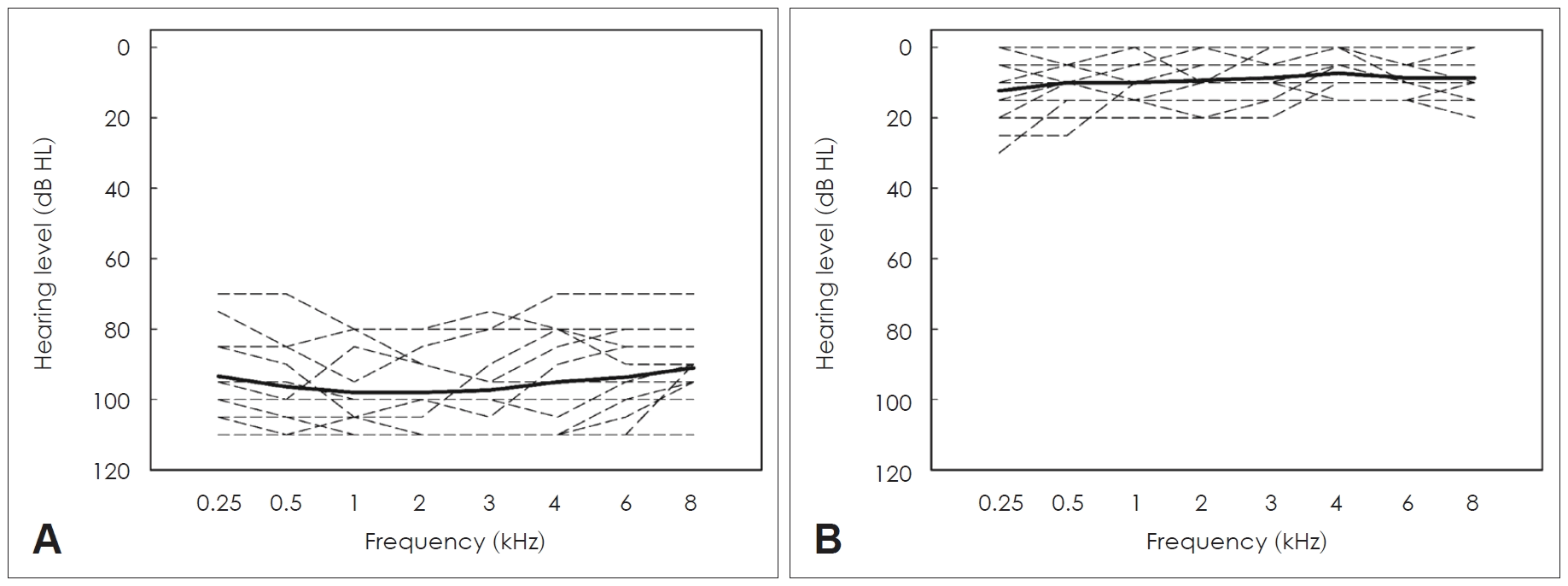
Individual (thin dashed lines) and mean (thick solid lines) hearing thresholds of the SSD ear (A) and contralateral NH ear (B) in 15 listeners with SSD. SSD, single-sided deafness; NH, normal-hearing.
Fifteen adults with NH participated as a control group (mean age, 29.40±4.63 years). NH adults were recruited to broadly approximate the age and sex distribution of the SSD group, without formal individual-level matching. All had hearing thresholds of ≤20 dB HL bilaterally at all audiometric frequencies between 250 and 8000 Hz. This study was approved by the Institutional Review Board of Nowon Eulji Medical Center (IRB #2019-93-010). All procedures involving human participants were conducted in accordance with the Declaration of Helsinki, and all participants provided written informed consent.
Speech-on-speech recognition under three-talker spatial configurations
All experiments took place in a double-walled sound-treated booth (2.2×2.5×1.8 m). Seven active loudspeakers (HS5; Yamaha) were positioned along the frontal horizontal plane from -90° to +90° at 30° intervals. The approximate distance from the listener’s head to the loudspeakers was 1 m, and the loudspeakers were positioned at ear level. All loudspeakers were calibrated using a sound level meter (Brüel & Kjær). Speech stimuli were presented using STUDIO ONE software (version 7.0; PreSonus Audio Electronics) through an audio interface (AudioBox USB 96; PreSonus).
Speech-on-speech recognition was measured using a threetalker paradigm in which listeners heard one female target sentence and two male competing sentences presented simultaneously on each trial. The female-talker target sentences were Korean Matrix sentences [22,23], which are semantically unpredictable but share a fixed grammatical structure (name, adjective, object, numeral, verb). The competing speech consisted of sentences produced by two different male talkers from the 20-talker Korean Speech-in-Noise corpus [24]. The target talker had a fundamental frequency (F0) of approximately 233.9 Hz, and the two masker talkers had F0 values of 123 Hz and 119.4 Hz. The competing sentences were longer than the target sentences to ensure continuous masking throughout the target presentation.
The target speech was always presented from the front loudspeaker (0° azimuth) at a fixed level of 65 dB SPL corresponding to a conversational speech level. The target-to-masker ratio, defined relative to the level of each competing talker, was fixed at -15 dB, which falls within the range of 50% speech recognition thresholds (approximately -20 to -11 dB SNR) reported for the Korean Matrix sentence test [25]. Listeners were instructed to repeat the target sentence while ignoring the competing speech. Sentence recognition score (SRS) was scored as the percentage of target words correctly repeated. The two competing talkers were either co-located with the target or spatially separated under symmetric and asymmetric configurations, as described below.
When the target and both competing talkers were positioned in front of the listener (S0°N0°), this condition served as the baseline condition in the present study. As shown in Fig. 2, in the symmetric configurations, the two competing talkers were symmetrically distributed across the left and right hemifields. The competing talkers were presented at near (±30°), intermediate (±60°), or far (±90°) spatial separations.
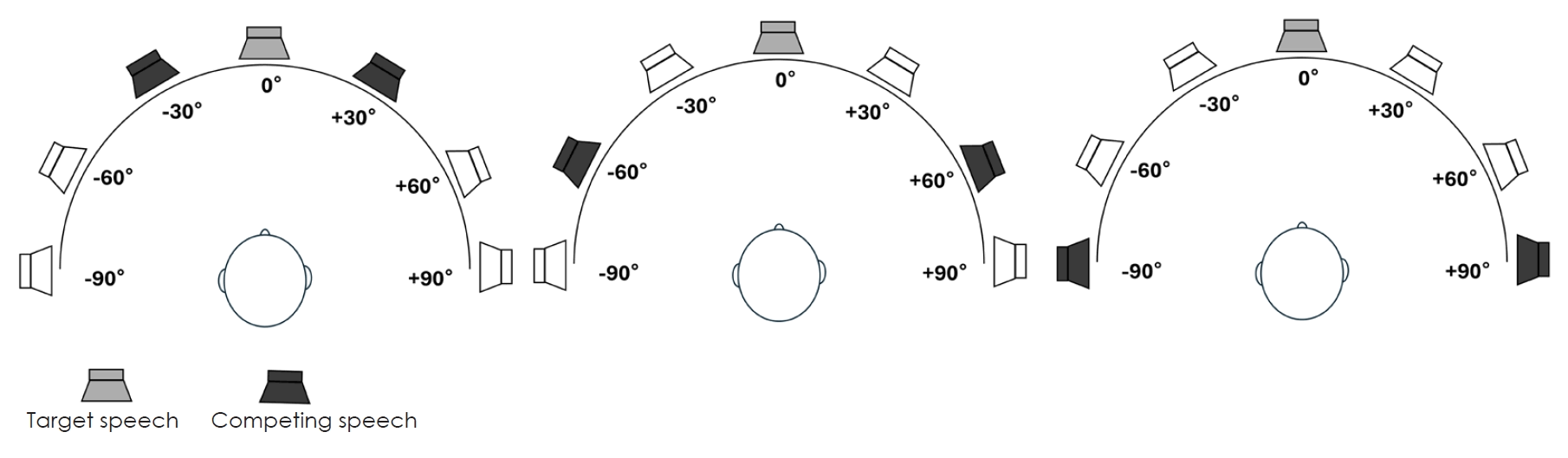
Schematic illustration of the setup for symmetric spatial configurations. From left to right: S0°N±30°, S0°N±60°, and S0°N±90°.
For the asymmetric configurations (Fig. 3), the target sentence was always presented from the front (0° azimuth), while both competing talkers were presented on the same side of the listener, either toward the NH ear or toward the SSD ear, as determined by the side of hearing loss in each SSD participant (S0°N-30°/-60°, S0°N-60°/-90°, S0°N+30°/+60°, and S0°N+60°/+90°). For the NH control group, the right ear was arbitrarily designated as the reference side corresponding to the SSD ear for consistency in labeling the experimental conditions across groups. Accordingly, maskers directed toward the left side were labeled as “toward the NH ear,” and maskers directed toward the right side were labeled as “toward the SSD ear,” consistent with the labeling used for the SSD group.
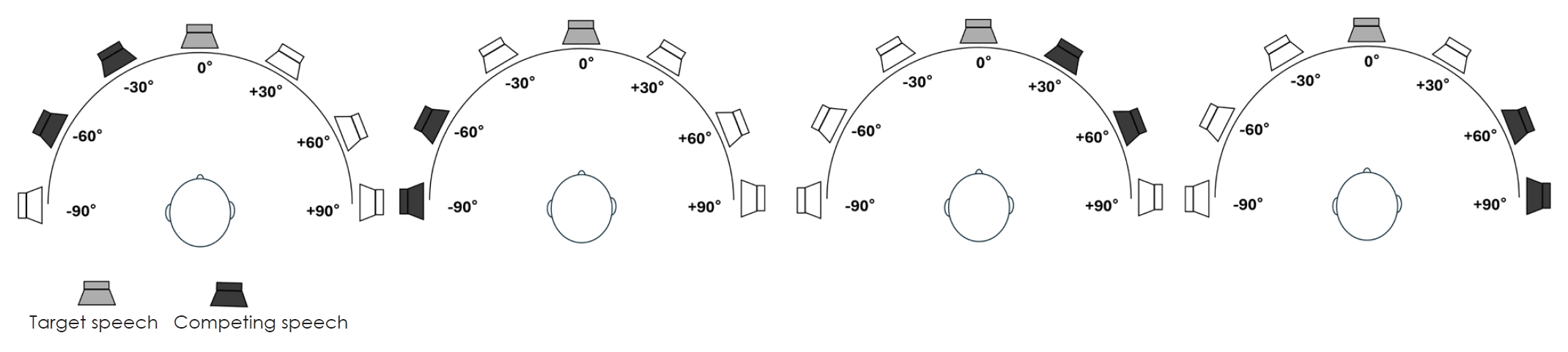
Schematic illustration of the setup for asymmetric spatial configurations. From left to right: S0°N-30°/-60°, S0°N-60°/-90°, S0°N+30°/+60°, and S0°N+60°/+90°.
SRM was calculated by subtracting the SRS in the co-located baseline condition (S0°N0°) from the SRS in each spatially separated condition, as follows:
SRM = SRS in spatially separated condition − SRS in S0°N0°
For symmetric spatial configurations, SRM values were calculated separately for each spatial separation angle (±30°, ±60°, and ±90°). For asymmetric spatial configurations, SRM values were calculated separately for the conditions in which both maskers were directed toward the NH ear and toward the SSD ear. Positive SRM values indicated improved speech recognition performance under spatially separated conditions relative to the co-located baseline condition.
Statistical analysis
Statistical analyses were conducted using SPSS version 30.0 (IBM Corp.). For symmetric spatial configurations, speech-on-speech recognition scores were analyzed using a mixed repeated-measures analysis of variance (ANOVA), with listening group (SSD vs. NH) as a between-subjects factor and symmetric spatial configuration as a within-subjects factor. For asymmetric spatial configurations, a separate mixed repeated-measures ANOVA was conducted with listening group (SSD vs. NH) as a between-subjects factor and asymmetric spatial configuration (baseline and four asymmetric configurations) as a within-subjects factor. For each listener, the asymmetric conditions were defined relative to the SSD ear, so that conditions with the maskers toward the SSD ear or toward the NH ear could be combined across participants with left- or right-sided deafness. When significant main effects or interactions were identified, post hoc pairwise comparisons with Bonferroni correction were performed. Sphericity was assessed using Mauchly’s test, and the Greenhouse–Geisser correction was applied when the assumption of sphericity was violated. Effect sizes were estimated using partial eta squared (η²p), and statistical significance was set at p<0.05.
Results
Speech-on-speech recognition and SRM in symmetric spatial configurations
Fig. 4 presents SRS obtained under the symmetric spatial configurations. In the baseline condition (S0°N0°), mean SRS was 21.93% for the SSD group and 30.20% for the NH group. A mixed repeated-measures ANOVA (group: SSD vs. NH; symmetric spatial configuration: baseline S0°N0°, S0°N±30°, S0°N±60°, and S0°N±90°) showed a significant main effect of group [F(1,28)=58.78, p<0.001, η2p=0.68] and a significant main effect of symmetric spatial configuration [F(3,84)=376.43, p<0.001, η2p=0.93]. A significant group×symmetric spatial configuration interaction was also found [F(3,84)=19.48, p<0.001, η2p=0.41], indicating that SRS improved with increasing spatial separation in both groups, but the pattern of improvement differed between groups.
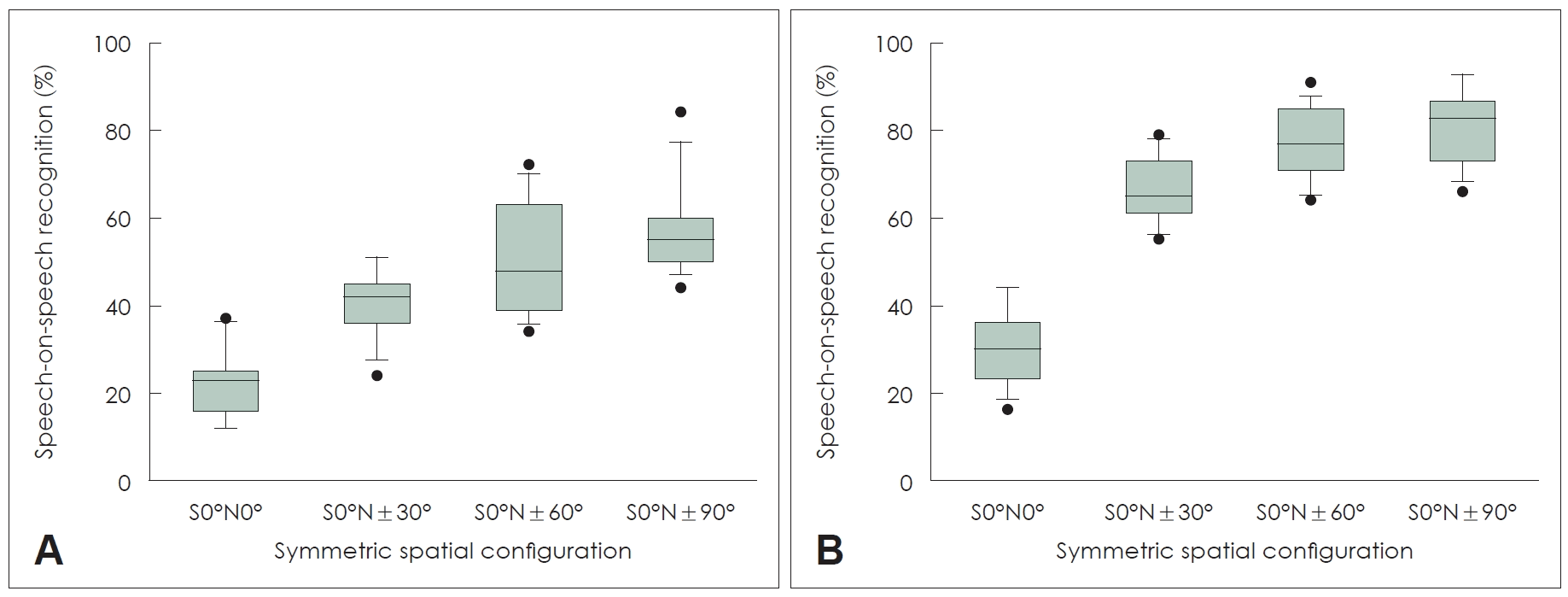
Speech-on-speech recognition under symmetric spatial configurations in the single-sided deafness (A) and normal-hearing (B) groups.
SRM was calculated relative to the baseline condition. Fig. 5 presents boxplots of SRM values across symmetric spatial separations for the SSD and NH groups. SRM increased with separation in both groups, although the increase was consistently smaller in the SSD group than in the NH group. In the SSD group, mean SRM was approximately 18, 28, and 36 percentage points (SD=6.72, 11.88, 10.84) at ±30°, ±60°, and ±90°, respectively. Individual variability in SRM appeared greater at spatial separations of ±60° and ±90° than at ±30° in the SSD group. In the NH group, mean SRM was approximately 36, 47, and 51 percentage points (SD=5.45, 4.80, 4.25) at the corresponding separations, respectively.
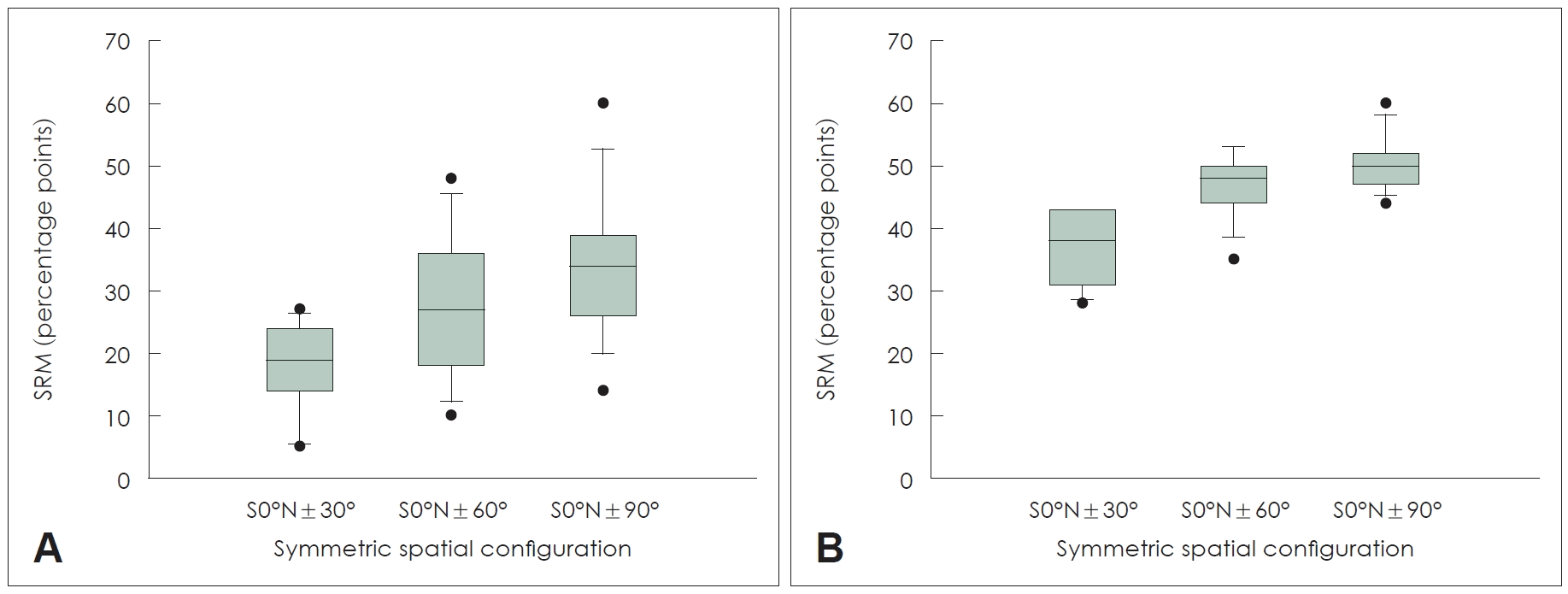
SRM under symmetric spatial configurations in the single-sided deafness (A) and normal-hearing (B) groups. SRM, spatial release from masking.
Speech-on-speech recognition and SRM in asymmetric spatial configurations
Fig. 6 presents speech recognition scores obtained under the asymmetric spatial configurations. A mixed repeated-measures ANOVA (group: SSD vs. NH; asymmetric spatial configuration: baseline and four asymmetric masker configurations) showed a significant main effect of group [F(1,28)=105.98, p<0.001, η2p=0.79] and a significant main effect of configuration [F(4,112)=290.75, p<0.001, η2p=0.91]. A significant group×configuration interaction was also found [F(4,112)=63.26, p<0.001, η2p=0.69].
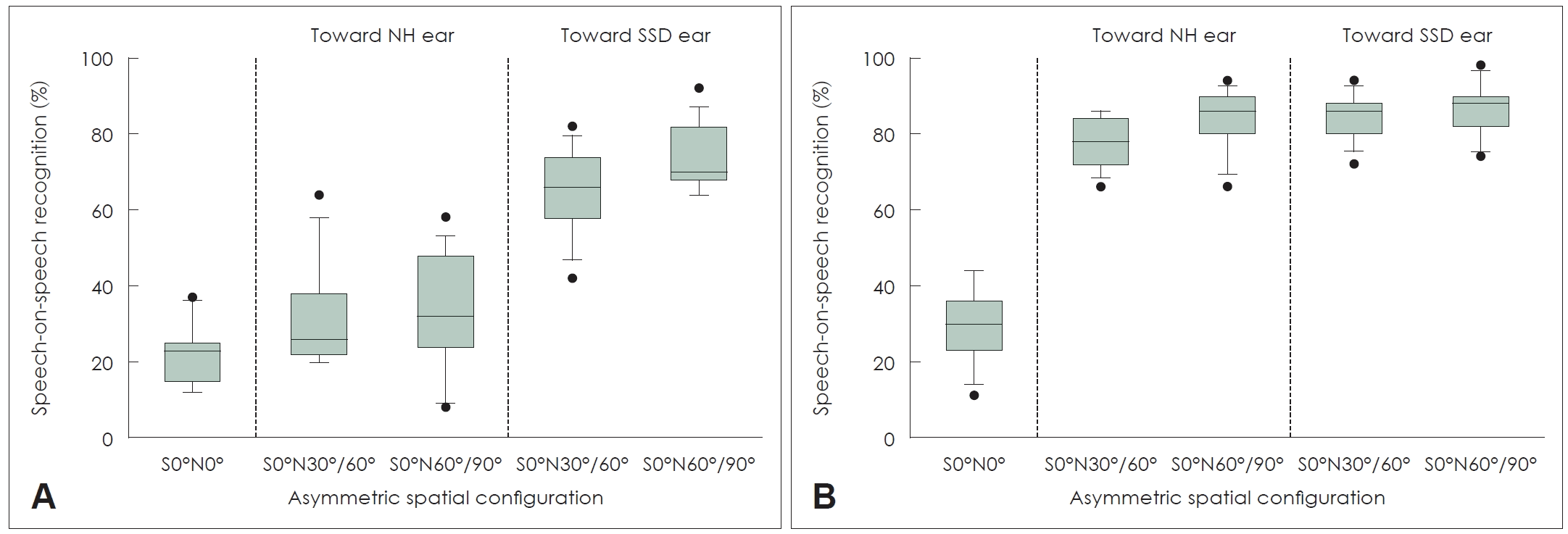
Speech-on-speech recognition performance under asymmetric spatial configurations in the SSD (A) and NH (B) groups. For the NH group, the right ear served as the reference side corresponding to the SSD ear. SSD, single-sided deafness; NH, normal-hearing.
The SRM values for the asymmetric configurations are presented in Fig. 7, grouped by the side of the competing talkers relative to each listener’s SSD ear. In the SSD group, SRM varied markedly with masker laterality. Mean SRM was approximately 44 and 59 percentage points (SD=7.67, 8.18) when the maskers were directed toward the SSD ear at 30°/60° and 60°/90°, respectively. Descriptively, these values were comparable in magnitude to the SRM observed in the NH group (approximately 48-57 percentage points). In contrast, when the maskers were directed toward the NH ear, SRM was small (approximately 10-11 percentage points) and showed greater interindividual variability (SD=12.62, 11.37), remaining well below the range observed in the NH group.
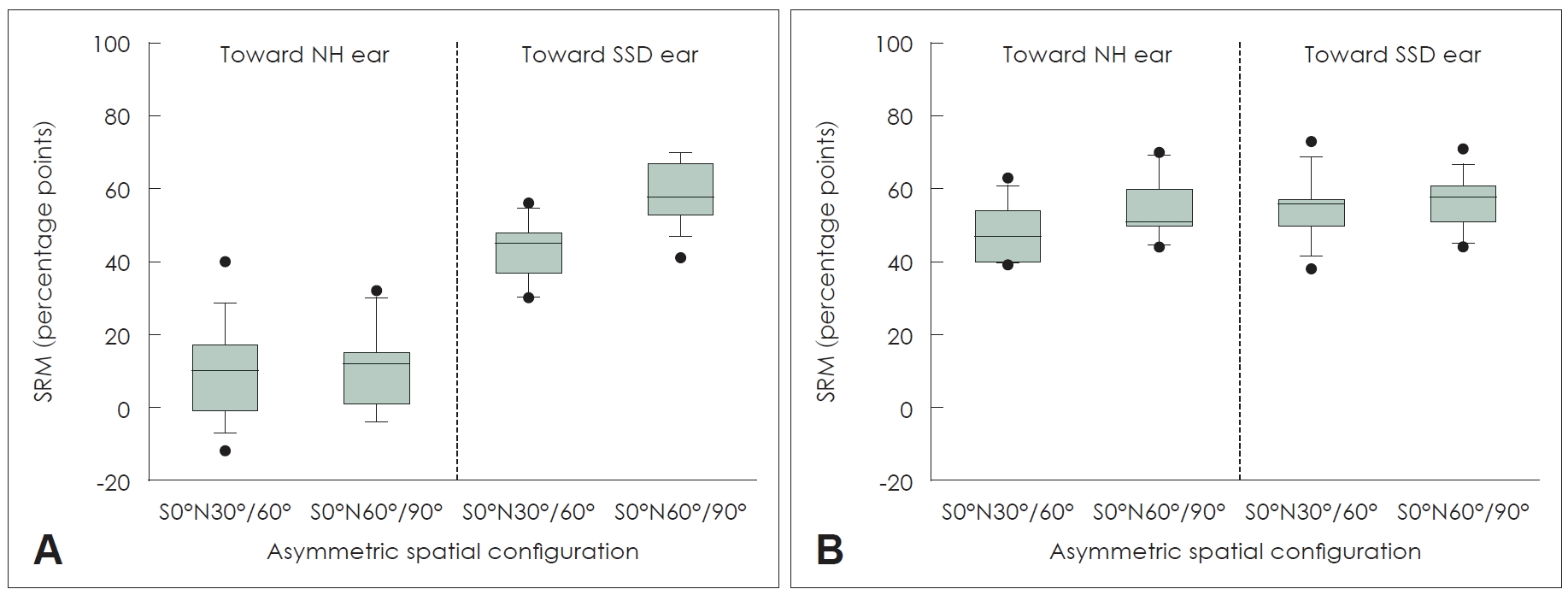
SRM under asymmetric spatial configurations in the SSD (A) and NH (B) groups. For the NH group, the right ear served as the reference side corresponding to the SSD ear. SRM, spatial release from masking; SSD, single-sided deafness; NH, normal-hearing.
Discussion
The present study examined SRM in listeners with SSD and NH controls using symmetric and asymmetric multi-talker configurations. Three main findings emerged, corresponding to the study hypotheses. First, consistent with the hypothesis that SRM varies with spatial configuration, SSD listeners showed measurable SRM that increased with spatial separation, including under symmetric masker arrangements, with individual variability increasing at larger spatial separations. Second, as hypothesized, SRM in SSD depended more strongly on masker laterality than in NH listeners in the asymmetric configurations. Third, exploratory comparison showed that when competing talkers were directed toward the SSD ear, SRM in the SSD group approached the magnitude observed in NH listeners, whereas SRM was markedly reduced when competing talkers were directed toward the NH ear. These results suggest that SRM in SSD is not uniformly reduced across spatial configurations and can approach that observed in NH listeners under favorable masker arrangements.
Consistent with previous studies, SSD listeners demonstrated poorer speech recognition performance than NH listeners across listening conditions. Nevertheless, spatial separation improved speech recognition in both groups, indicating that SRM remained available despite unilateral hearing loss. SRM reflects the combined contributions of a monaural better-ear advantage and binaural unmasking [13,14]. Because SSD listeners lack functional binaural input, the SRM observed in the present study likely reflects primarily better-ear access associated with the acoustic head-shadow effect, consistent with previous findings emphasizing the role of head-shadow effects in spatial release among listeners with unilateral hearing loss [26].
In the symmetric conditions, SRM increased with spatial separation in both groups, although it remained smaller in SSD listeners than in NH listeners at all separation angles. In listeners with two functional ears, symmetric placement of maskers around a frontal target reduces the better-ear advantage associated with the acoustic head shadow [16]. In SSD listeners, however, the head shadow may attenuate the masker on the deaf side more than that on the hearing side, allowing some monaural spatial benefit even under a symmetric arrangement. Individual variability in SRM was greater at ±60° and ±90° than at ±30°, indicating that the magnitude of spatial benefit varied across listeners.
The asymmetric configurations showed a pronounced dependence on masker laterality, consistent with the acoustic head-shadow effect. When maskers were directed toward the SSD ear, more favorable better-ear access may have allowed SSD listeners to achieve SRM comparable in magnitude to that of NH listeners. This similarity concerned the magnitude of spatial benefit rather than absolute performance, since speech recognition in the SSD group remained lower than in NH listeners across conditions, consistent with the significant group main effect. In contrast, when maskers were directed toward the NH ear, SRM remained small and variable, far below the level observed in NH listeners. A small positive mean SRM was nonetheless observed in this unfavorable configuration. Nonspatial talker cues, such as F0 differences between the female target and male maskers, may have facilitated speech segregation across conditions. However, because these cues were present in both the co-located and spatially separated conditions, their contribution to the observed SRM cannot be determined from the present data [20].
The present findings extend previous studies of spatial release in unilateral hearing loss. The pronounced masker-laterality effect observed in the asymmetric configurations is consistent with the head-shadow-driven pattern reported by Rothpletz, et al. [26] and Corbin, et al. [27] using single-masker paradigms. The present study showed that SSD listeners also derive measurable, though individually variable, spatial benefit under symmetric multi-talker configurations, and demonstrated that the magnitude of this benefit can approach that observed in NH listeners when the masker configuration is favorable. Previous multi-talker studies have highlighted the role of nonspatial talker cues in speech segregation [17,19,20]. However, their contribution to SRM could not be isolated in the present study. The strong dependence of SRM on masker laterality may help explain variability in the listening difficulties experienced by individuals with SSD, as the degree of functional impairment may depend not only on hearing loss severity but also on the spatial characteristics of competing sound sources.
From a clinical perspective, the present findings suggest that assessment based on a single spatial configuration may not fully characterize functional speech-on-speech performance in SSD, since the direction-dependent effects observed here would not have been apparent from a single co-located or spatially separated condition alone. Audiometric findings alone may not fully reflect the functional listening difficulties experienced by individuals with SSD, and conventional audiometry and simple speech-in-noise tests may not adequately capture the challenges of complex, real-world environments involving multiple spatially distributed talkers. Despite this, spatial hearing is not routinely assessed in clinical practice. Assessment across different spatial configurations and masker lateralities may therefore provide additional information when evaluating communication difficulties and counseling individuals with SSD.
However, several limitations should be acknowledged in this study. First, speech recognition was evaluated under controlled laboratory conditions and may not fully represent the complexity of everyday communication. Second, only a limited number of spatial configurations were examined. Future studies should investigate a broader range of multitalker arrangements and determine whether similar patterns are observed in listeners using different rehabilitation devices, including CROS systems, BCDs, and cochlear implants. Third, all participants developed SSD at or after the age of 14 years. Consequently, the present findings may not generalize to individuals with congenital or early-onset SSD. Fourth, because talker sex and F0 differences were not experimentally manipulated, the contribution of voice-based segregation cues could not be directly quantified and should be examined in future studies. In addition, the SSD group in this study included participants with heterogeneous etiologies (e.g., vestibular schwannoma, post-viral SSD, idiopathic sudden sensorineural hearing loss, and unknown causes), which may have contributed to individual variability in SRM and should be considered when interpreting the present findings.
In conclusion, listeners with SSD demonstrated measurable SRM in multi-talker environments, including under symmetric masker arrangements. The magnitude of spatial benefit depended strongly on spatial configuration and masker laterality. When competing talkers were directed toward the SSD ear, SRM approached that of NH listeners, whereas SRM was markedly reduced when competing talkers were directed toward the NH ear. These findings indicate that spatial hearing performance in SSD varies across listening configurations and highlight the importance of considering spatial configuration and masker laterality when evaluating functional speech-on-speech performance in individuals with SSD.
Notes
Acknowledgments
This work was supported by the National Research Foundation of Korea (NRF) grant funded by the Korean government (NRF-2020R1I1A3071587).
Author Contribution
Conceptualization: all authors. Data curation: Hyo Jung Choi, Jae Hee Lee. Formal analysis: Hyo Jung Choi, Jae Hee Lee. Funding acquisition: Hyun Joon Shim. Investigation: Hyo Jung Choi. Methodology: Hyo Jung Choi. Supervision: Hyun Joon Shim, Jae Hee Lee. Writing—original draft: Hyo Jung Choi. Writing—review & editing: all authors.